Winx Club Moonlight Quest Transform at Will, Fly Freely
Master Bloom’s fairy form and open-world flight before you chase Magix secrets.
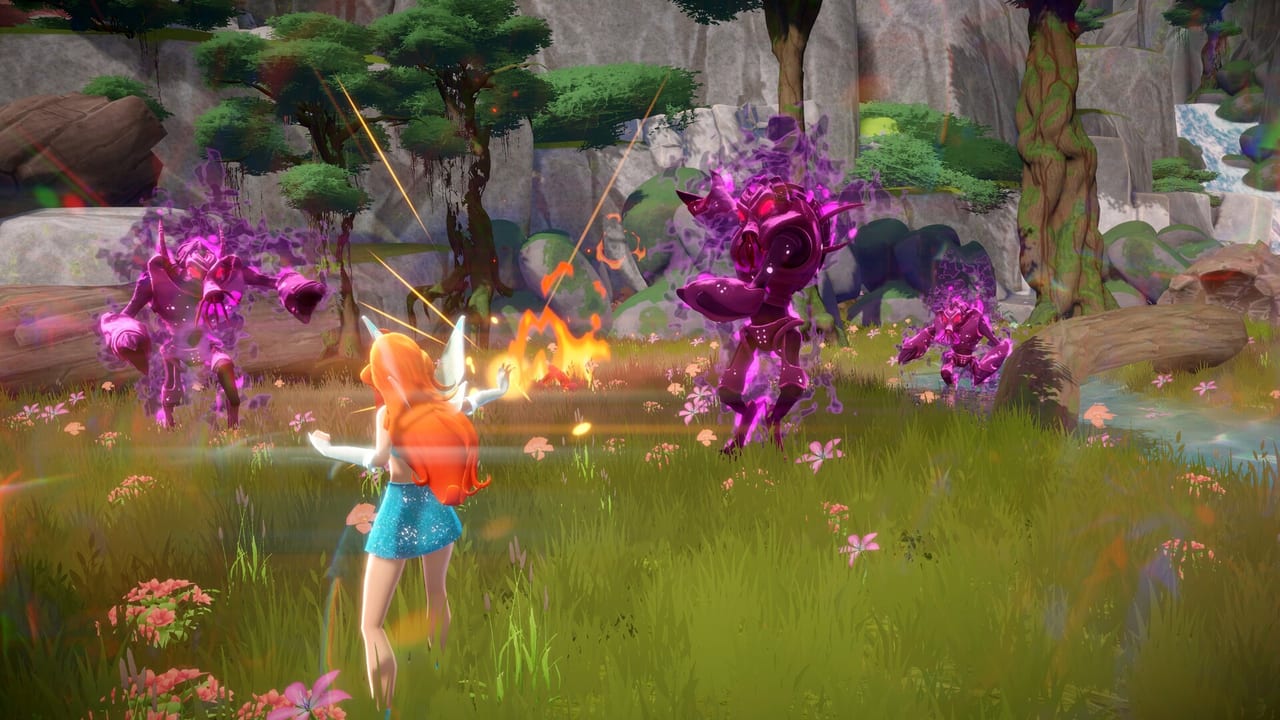
The marketing line for Winx Club: Moonlight Quest is delightfully blunt: Transform. Take flight. Explore. Balio Studio built the fantasy around playing as Bloom, switching into fairy form when you want, and soaring across an open Magic Dimension instead of unlocking wings fifty missions later. This guide explains how to think about those systems so Magix feels big on purpose—not like a ground path with occasional cutscene flights.
For button habits, keep Controls open in another tab. For where to point your wings, use Locations. For why the world is in trouble, skim the spoiler-light Story Overview.
Why transform-at-will matters
Many fairy or superhero games gate spectacle behind meters, story flags, or arena-only modes. Moonlight Quest’s public promise is that Bloom can transform at will and then fly freely through the open world. That design intent changes how you should explore:
- Treat rooftops, tower rings, and sky bridges as normal routes
- Assume vertical secrets exist above street level in Magix City and school campuses
- Expect combat tutorials to teach fairy-form tools, not only ground combos
- Plan screenshot stops and scout passes from altitude before committing to a street approach
Until you own the build, we will not invent gauge numbers or cooldown timers. If a soft limit exists in the final game, the tutorial will teach it—your pre-launch job is to prioritize the transform bind and practice swapping under low pressure.
Flight as the primary traversal layer
Free flight is not a side ability; it is how you read the map. After onboarding:
- Climb first. Gain altitude over a plaza so landmarks resolve—Alfea’s campus shapes, Cloud Tower’s silhouette, Red Fountain’s athletic geometry, Magix City’s skyline.
- Scout second. Circle once looking for glow, trails, or rooftop props that suggest collectibles or side content.
- Commit third. Dive toward the objective with a clear landing plan so you do not clip trees or stall against walls.
- Rescout after story beats. New festival events can repaint districts; a second aerial pass often reveals paths that were gated an hour earlier.
Players who only walk roads will finish the Festival mystery eventually, but they will fight the intended pacing. Flight shortens busywork and sells the Winx fantasy the trailers show.
Ground form still matters
Transform-at-will does not mean fairy form is always optimal. Expect ground form (or non-flight movement) to feel better for:
- Tight indoor halls and classroom conversations
- Precision platforming where wings overshoot ledges
- Stealth-adjacent moments if enemies react to aerial silhouettes
- Talking to NPCs who trigger prompts only at street level
A strong player rhythm is walk the social spaces, fly the travel spaces, transform again when a fight or tower climb starts. That rhythm keeps cutscenes, dialogue, and spectacle from fighting each other.
Combat while transformed
Store descriptions call out mastering magical powers and epic battles. Fairy form is where signature Bloom fantasy should peak—projectile magic, defensive bubbles or shields, and mobility that lets you reset bad positioning. Practical habits:
- Do not panic-spam transform mid-telegraph. Swap before the exchange, then focus on dodge timing.
- Use altitude as a reset. If a ground pack overwhelms you, create space with a short ascent when the arena allows it.
- Track camera focus. Aerial fights punish look-stick laziness; recenter on the elite enemy before spending big cooldowns.
- Land to loot and talk. After a win, drop to ground form so interaction prompts stay readable.
Local challenge modes will stress the same verbs under score pressure. If transform or boost feels awkward there, remap before you blame the encounter design—see Controls.
Exploration drills to run on day one
Spend ten minutes after the tutorial on a deliberate drill instead of sprinting the main quest marker:
- Transform in a safe courtyard.
- Climb until the mini-map (or horizon) shows multiple districts.
- Pick a landmark from Locations and glide there without touching the ground.
- Land on a balcony or tower ring, not the main door—force yourself to learn vertical exits.
- Descend, cancel or swap form if needed, and enter through the intended social entrance.
- Repeat once at dusk or after the next story flag when lighting changes.
That single drill teaches more about Moonlight Quest than reading another feature bullet.
Reading Magix from the air
Iconic series locations are confirmed playgrounds: Alfea, Cloud Tower, Red Fountain, and Magix City, with room for more regions in the full map. Aerial tells to watch for:
- Courtyard symmetry at Alfea that hints at side wings and dorm access
- Vertical menace at Cloud Tower—assume climbs and exterior rings matter
- Wide parade grounds at Red Fountain that invite speed runs and challenge hotspots
- Dense skyline gaps in Magix City perfect for weave practice between neon and stone
When the Festival of the 100 Moons goes wrong, expect story to pull you across these silhouettes. Flight turns that travel into play instead of loading-screen tourism. Keep mystery details inside the Story Overview—this page stays systems-focused.
Performance and comfort while flying
Long glides amplify motion sickness and frame hitches. On PC, stay near the recommended specs if you crank view distance. On console, prefer Performance modes if a choice appears and you care about stick response more than static resolution. Lower camera shake, raise FOV slightly if available, and take breaks during marathon exploration nights.
How flight pairs with challenges
The 32 challenges across 4 game modes extend the adventure beyond Bloom’s campaign and unlock up to 24 characters in Magic Challenge mode. Even when you are not playing Bloom, the traversal language you learn here—boost lines, landing discipline, transform timing—transfers. Teach guests the flight drill before competitive playlists so split-screen chaos stays fun.
Pre-launch honesty
We have trailers, screenshots, and store copy—not a locked design doc. The official short embedded on this page is the best current look at the fantasy in motion. Final stamina rules, exact animation cancel windows, and whether every region allows unrestricted flight from minute one will be confirmed in the shipped build. What will not change is the intent: Bloom should feel like a fairy who owns the sky.
Practice the verbs, protect the binds, scout from above, and Magix will open the way Balio Studio pitched it—transform at will, take flight, and explore.
Frequently Asked Questions
Quick answers to the most common questions.
Can Bloom transform whenever she wants?
Official materials say you can transform at will and fly freely across the open world. Any tutorial gates or soft limits will be clearest in the shipped build.
Is flight only for cutscenes?
No. Free flight is presented as open-world traversal, not a scripted-only sequence. Use it to scout landmarks and cross Magix districts.
Should I stay in fairy form all the time?
Probably not. Use fairy form for travel and fights, and ground movement for tight interiors, NPC conversations, and precision landings.
Where should I practice flight first?
After onboarding, run a short drill: climb above a plaza, glide to a known landmark, land on a balcony, then enter at street level.
Does flight matter in challenge modes?
Yes. The same mobility habits help in the 32 challenges and four game modes, even when you unlock additional Magic Challenge characters.